Equipment Lease
Residual Value in Equipment Leasing: What You Need to Know

Updated
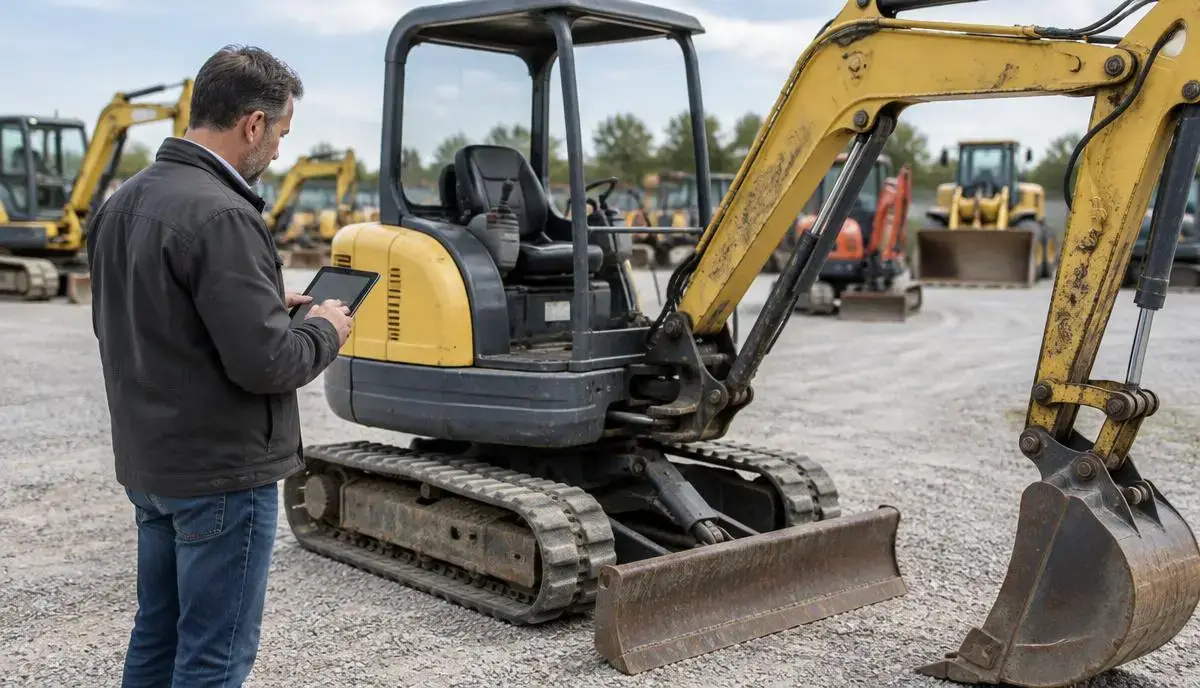
The residual value plays a central role in determining the monthly lease payment for business assets. This is the estimated value that the object will still have at the end of the agreed lease period. An accurate estimate ensures a realistic monthly amount and prevents surprises afterwards.
What exactly is the residual value of equipment?
The residual value is the expected market value of the equipment or machinery after the lease contract expires. The higher this expected value, the lower the amount you need to pay off during the term.
Factors such as the brand, the expected intensity of use, and the degree of technological obsolescence determine how high the residual value is estimated in advance.
Impact on the monthly lease payment
Because you only pay off the difference between the purchase value and the residual value (plus the interest component) during the term, your monthly costs are significantly reduced. View our explanation about equipment lease for more details on this structure.
- High residual value: lower monthly costs for the agreed term.
- Low residual value: higher monthly costs, but a smaller final amount upon acquisition.
- Final instalment: the pre-determined amount remaining at the end of a financial lease.
End-of-contract options
At the end of the contract period, depending on the chosen lease type, you have various options. With a financial lease, you become the full owner after settling the final instalment, whereas with an operating lease, you return or replace the asset.
Which factors influence the residual value of your equipment?
The ultimate residual value of equipment is influenced by various factors, which are considered at the start of the lease contract. Age and intensity of use are crucial; equipment that has been heavily used or in long-term operation will depreciate faster than machines used less frequently or under lighter conditions. The overall state of maintenance also plays an important role. Regular and adequate maintenance helps preserve the technical functionality and aesthetic value of the assets, which directly impacts their future salability or leaseability.
In addition, external market conditions have an impact. The supply and demand in the market for second-hand equipment can fluctuate, for example due to technological developments that quickly render older models obsolete, or due to economic cycles that affect investment willingness. The brand's reputation and the availability of spare parts and service also help determine how attractive an asset is after the lease period. Leasing companies use specialised models to assess these diverse influences and estimate the residual value as accurately as possible.
- Age and intensity of equipment use
- Quality of maintenance and overall condition
- Market demand and technological developments
- Brand reputation and availability of service
How is the residual value determined by the leasing company?
Leasing companies apply specific methodologies to determine the expected residual value of equipment at the end of a lease contract. This process begins with a thorough analysis of the specific asset, taking into account the lifecycle of the equipment type, the expected depreciation based on industry standards, and the duration of the lease period. Historical data of comparable assets and market forecasts for the relevant industry are reviewed. The goal is to make a realistic estimate of the market value at the time the contract expires.
Factors such as the agreed intensity of use – for example, a maximum number of operating hours or kilometres – also play a role. Deviations from these agreements can affect the ultimate condition of the equipment and thus its residual value. The leasing company uses internal experts and sometimes external appraisers to arrive at a well-founded and objective residual value determination, which then forms the basis for the lease calculation and the monthly instalments.
Frequently asked questions
Who determines the residual value of the equipment?
The leasing company determines the residual value based on historical market data, expected depreciation, and the intended use of the asset.
What happens if the actual market value differs at the end?
With an operating lease, the risk of value fluctuation lies with the leasing company; with a financial lease, the agreed final instalment is fixed in advance.