Business Driving & Tax
Business Leasing a Hybrid Car: Tax Rules and Tips

Updated
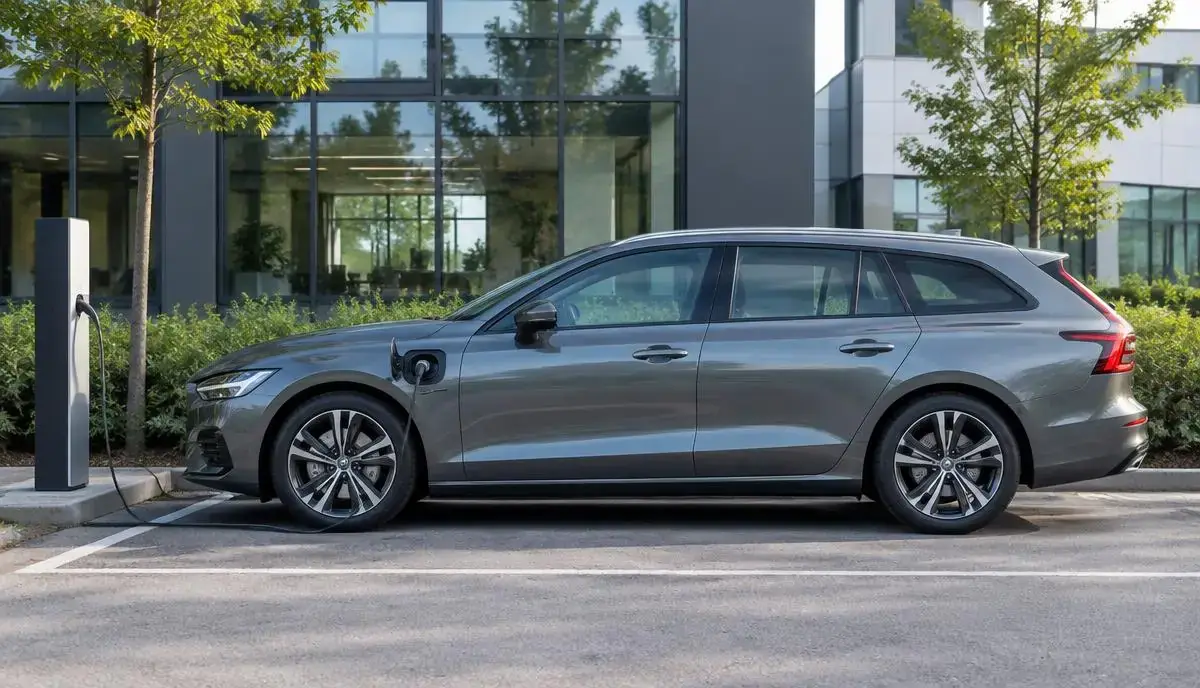
Using a hybrid car for business purposes is very popular among entrepreneurs and business drivers. This combination of an internal combustion engine and an electric motor offers an efficient interim step towards fully electric driving. In this article, we cover the most important aspects and tax considerations.
Different types of hybrid vehicles
When choosing a company hybrid car, you can opt for mild hybrid, non-plug-in hybrid (HEV), and plug-in hybrid (PHEV). Plug-in hybrids feature a larger battery that can be charged via a charging station, allowing you to cover shorter distances purely on electric power.
The best type of vehicle depends on the driver's usage profile. Many motorway kilometres require different support than frequent city driving.
Tax aspects and addition to taxable income
With a company hybrid car, the **addition to taxable income (bijtelling)** plays a central role as soon as you also use the vehicle privately. If you drive more than 500 kilometres privately per calendar year, an addition to taxable income will be added to your income.
Would you like to compare which model best suits your business situation? Directly view our range of hybrid cars for current models and specifications.
Reimbursement of fuel and charging costs
With a plug-in hybrid, you will incur both fuel and electricity costs. It is wise to make clear agreements in advance about charging at home and on the road.
A business charge card can offer a solution to neatly automate all charging sessions. The home charging station can often be set up so that the consumed electricity is automatically settled with the company.
- Business charge card for public and fast charging
- Automation of home electricity cost settlement
- Clear policy for fuel consumption abroad
What role does CO2 emissions play for a hybrid lease car?
The CO2 emissions of a vehicle are an important factor in the tax treatment of lease cars in the Netherlands. Although the specific tax benefits for CO2-efficient cars have been phased out in recent years, emissions remain relevant for general environmental performance and the perception of sustainability. Hybrid cars, especially plug-in hybrids, often score more favourably on CO2 emissions than comparable models with only an internal combustion engine, due to their combination of an internal combustion engine and an electric motor.
The official CO2 value, measured according to the WLTP cycle, is still used for various environment-related levies and can indirectly affect operational costs. Lower CO2 emissions, for example, can lead to lower fuel consumption with efficient use. For businesses, choosing models with lower CO2 emissions can also contribute to achieving sustainability goals and positively impact the company's reputation.
Considerations when choosing a plug-in hybrid
Choosing a plug-in hybrid (PHEV) can be economically advantageous for a business, provided it is used correctly. The success of a PHEV strongly depends on the ability to charge the car frequently. If the car primarily runs on the petrol engine due to insufficient charging options, the promised efficiency benefits disappear, and fuel costs may even be higher than for a comparable petrol car. Therefore, carefully analyse driving behaviour and available charging infrastructure.
Additionally, it is important to consider the weight of a PHEV, which is often higher than that of a comparable petrol or diesel car due to the battery pack. This higher weight can affect vehicle tax (MRB) and the car's driving dynamics. Also, consider practical aspects such as the electric-only range and charging speed, which are crucial for daily usability and cost savings. A well-considered choice begins with a good assessment of its deployability.
- Frequent charging for optimal efficiency.
- Analyse anticipated driving behaviour and charging possibilities.
- Higher weight affects vehicle tax and consumption.
- Pay attention to electric range and charging speed.
Frequently asked questions
Is the addition to taxable income for a hybrid car different from that for petrol?
The amount of the addition to taxable income depends on the CO2 emissions and the date of first registration. Consult your advisor or the Dutch Tax Authorities (Belastingdienst) for current percentages.
Can I claim home charging costs as a business expense?
Yes, provided there is a suitable charging station with an intermediate meter to demonstrably register business consumption.