Equipment Lease
Leasing Construction Equipment: Options for Your Business

Updated
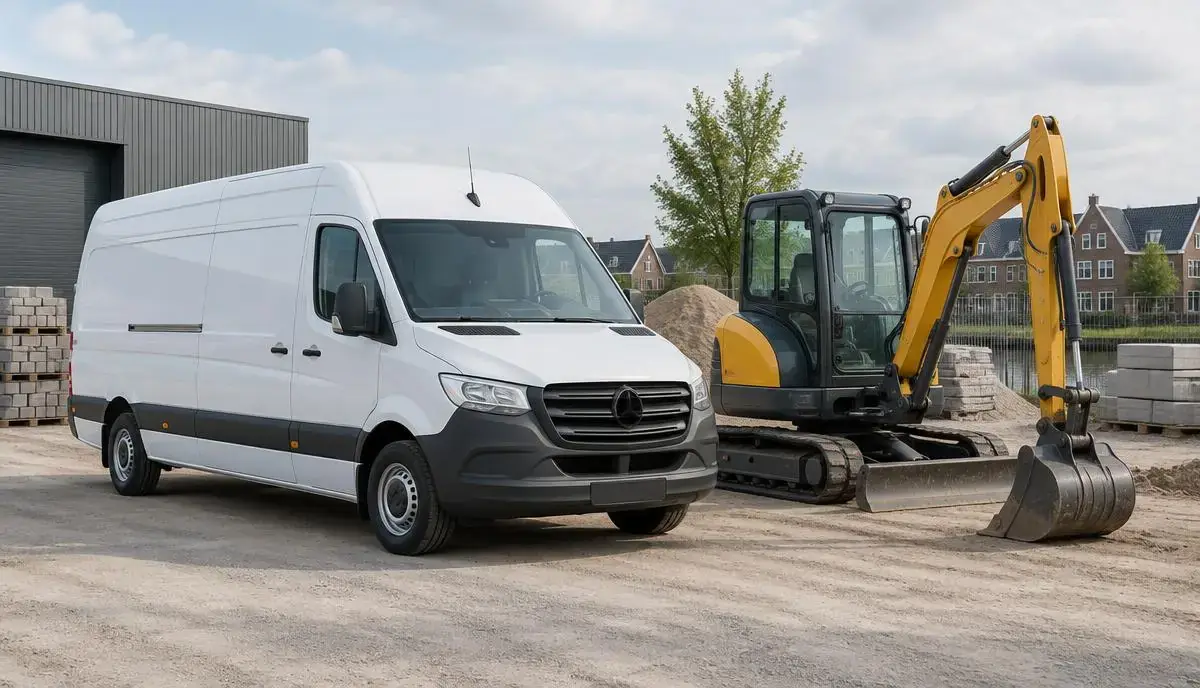
Acquiring heavy construction or earthmoving machinery often requires a substantial investment. Leasing allows you to spread these costs over a longer period, ensuring that your working capital remains available for daily operations. This way, you can quickly access the right equipment for your projects without impacting your liquidity.
Financial Flexibility on the Construction Site
With equipment lease, you acquire expensive construction machinery without having to pay the full purchase amount in one go. The leasing company finances the asset, while you pay a fixed monthly amount for its use or acquisition.
By spreading the costs over the expected useful life, you retain financial leeway for unforeseen expenses, personnel, or other business investments on the construction site.
Different Lease Forms for Earthmoving Equipment
Depending on your business situation, you can choose between financial lease and operational lease. Consult our information on equipment lease for a clear overview of the options for your machinery fleet.
- Financial lease: you become the economic owner and can fiscally depreciate the machine.
- Operational lease: you rent the equipment, including any maintenance agreements, without impacting your balance sheet.
Maintenance and Insurance of Machinery
When leasing heavy equipment, it is important to make clear agreements about maintenance, inspections, and insurance. With operational lease, these components are often included in the monthly price, whereas with financial lease, you manage this yourself.
Which Types of Construction Machinery Are Suitable for Leasing?
Lease structures are widely applicable within the construction industry, covering a range of equipment, from heavy earthmoving machinery to specialised tools. This includes excavators, wheel loaders, bulldozers, and shovels, which often require a significant investment upon purchase. Smaller, yet essential equipment such as aerial work platforms, telehandlers, vibratory plates, and generators also qualify. By leasing, the company's capital buffer remains intact for other operational needs.
Suitability for leasing often depends on the lifespan, residual value, and frequency of use of the machine. Newer, more durable machines with a predictable residual value are generally more attractive to lease providers. This also applies to equipment that needs regular upgrades due to technological developments or changing emission standards. Leasing then offers the flexibility to switch to more modern equipment after the contract period.
- Earthmoving machinery (excavators, bulldozers)
- Aerial work platforms and telehandlers
- Compact equipment (mini excavators, vibratory plates)
- Trucks and special vehicles
What Are the Tax Benefits of Leasing Construction Equipment?
Leasing construction equipment can offer various tax benefits for businesses. With operational lease, the assets remain off-balance sheet, which can improve the company's solvency. The lease payments are fully tax-deductible as business expenses from profit, directly leading to a lower taxable base. This makes investing in necessary machinery financially more attractive and more predictable in terms of operating costs.
With financial lease, the equipment is on the balance sheet, allowing for depreciation. This means the reduction in value of the machine can be claimed annually as an expense, which also lowers taxable profit. Additionally, depending on the investment and type of business, claims can be made for investment allowance schemes such as the Small-Scale Investment Allowance (KIA - Kleinschaligheidsinvesteringsaftrek), if the conditions are met.
Frequently asked questions
Can I also lease used construction equipment?
Yes, in many cases it is possible to lease young used construction equipment, provided the condition and age of the machine meet the financier's requirements.
Who is responsible for the maintenance of leased machinery?
This depends on the chosen lease form: with financial lease, you are responsible, whereas with full-operational lease, this is handled by the leasing company.